bess design housing protection solutions

Design flexibility and integration don’t have to compromise delivery speed.
You’ve come up with a new BESS prototype. The result of countless conversations and design iterations. Now it’s time for scalability. What you don’t need now is a whole series of new design challenges, whether they’re to do with different battery sizes and configurations, outdoor environments, local standards requirements, or something else entirely.
Let’s take a look at the most common obstacles that slow BESS projects at the final hurdle – and how a smarter approach to housing and protection can help you overcome them, accelerate deployment, and stay ahead in a fast-moving market.
What slows final delivery?
Innovative BESS designs often bring housing and protection challenges that standard solutions can’t easily solve. These issues may not surface until late in the project, but when they do, they can cause costly delays.
For example, higher energy density may demand advanced cooling methods such as liquid-based systems, which require precise integration with the housing. And BESS designs with unique power distribution can require unconventional electrical layouts that don’t fit within standard enclosure designs. Elsewhere, flexible or relocatable BESS units need enclosures engineered for safe, efficient shipping, even when they’re extremely heavy. Plus, aesthetic integration matters too.
For many innovators, the housing should reflect the sophistication of the core BESS technology. When these factors aren’t addressed early, they can turn into last-minute engineering problems, slowing final delivery and increasing costs.
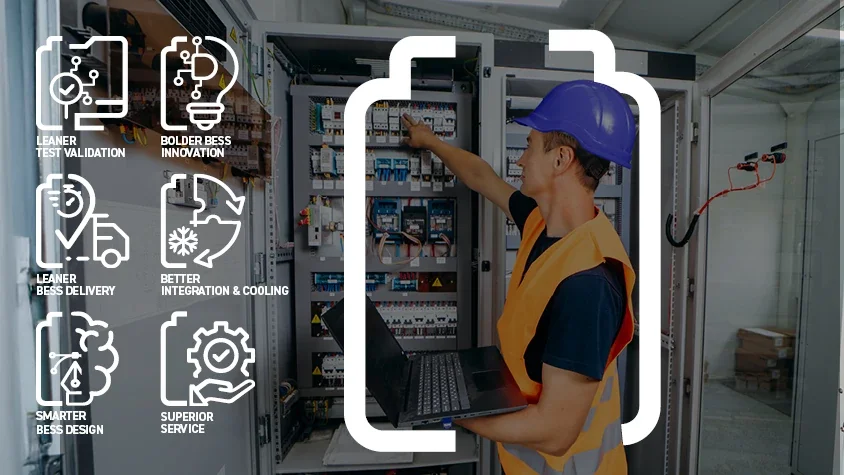
From design freeze to delivery faster
You’ve developed a new solution – the result of countless design iterations and prototyping. What you don’t need now is a whole series of new design challenges, whether they’re to do with cooling, weather resistance, power distribution, or something else entirely.
Let’s take a look at the most common obstacles that slow BESS projects at the final hurdle – and how a smarter approach to housing and protection can help you overcome them, accelerate deployment, and stay ahead in a fast-moving market.
Think about the finished product early
Housing and protection systems should always be designed around your core intellectual property, not the other way around. Your BESS shouldn’t need to be re-engineered just to fit within enclosure constraints. That said, there’s real value in thinking about housing and protection early in the development cycle. In fact, doing so can sometimes push the limits of what’s possible in your core BESS design.
Start early with a partner who gets BESS housing, cooling and integration.
The key is to engage early with a design and manufacturing partner who can identify ways to give you more freedom to innovate.
For example, could advanced cooling configurations enable you to safely push thermal performance further? Could housing options for unconventional electrical systems simplify mechanical design and reduce complexity? Could enclosure elements such as plinths make assembly and shipping more efficient, opening up new opportunities for your overall product architecture?
By treating housing and protection as an enabler, rather than an afterthought, you can accelerate innovation while staying ahead of compliance requirements.
A case study that lead to faster deployment
Nerve Smart Systems is an innovative company transforming high-power EV charging technology. Partnering with nVent SCHROFF, Nerve Smart Systems solved housing, cooling, and compliance challenges in parallel with product design, innovating faster with co-design. Key highlights of the collaboration include:
• Semi-Mobile Chargers – Rugged, transport-ready enclosures with integrated lifting features
• Housing Advanced Electronics – Secure, optimized layouts for inverters, BMS, and Nerve Switch®
• Cooling High-Power Batteries – Double-wall construction and AC-ready designs for heat control
• Withstanding Harsh Conditions – IP55 protection, snow-load resilience, and seismic readiness
• Rapid Prototyping – Modular manufacturing for fast pilots and market entry
Introducing nVent
At nVent, we work alongside you to design many of the critical final elements of your BESS system, from housing, cooling, and security to fire suppression, electronics design, and local compliance.
We give you the freedom to shape your core system exactly as you envision it, without being constrained by enclosure or compliance challenges later. This proactive and flexible approach eliminates costly redesigns at the final stage and keeps your BESS product roll-outs moving.
When it’s time to deliver, our modular system architecture means we can move quickly, adapting designs and production to meet your specific market requirements without starting from scratch. Let’s save some BESS development time together.
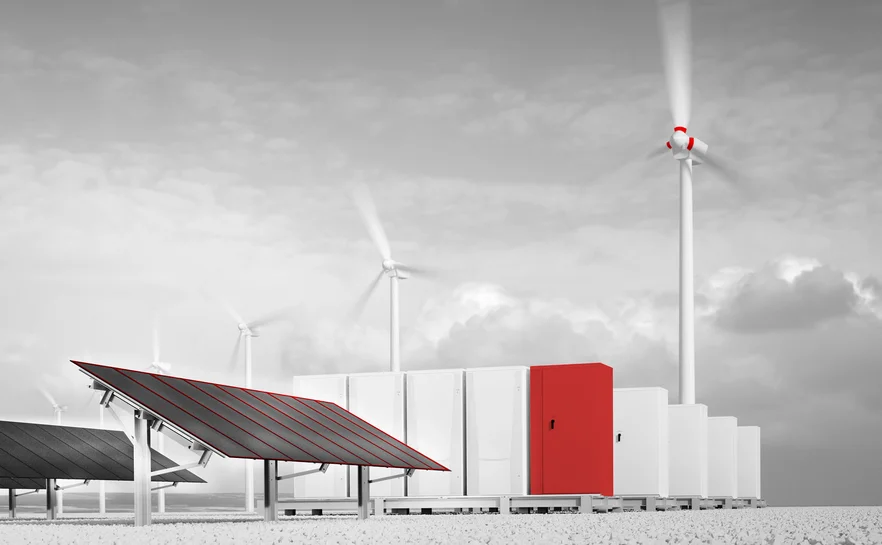

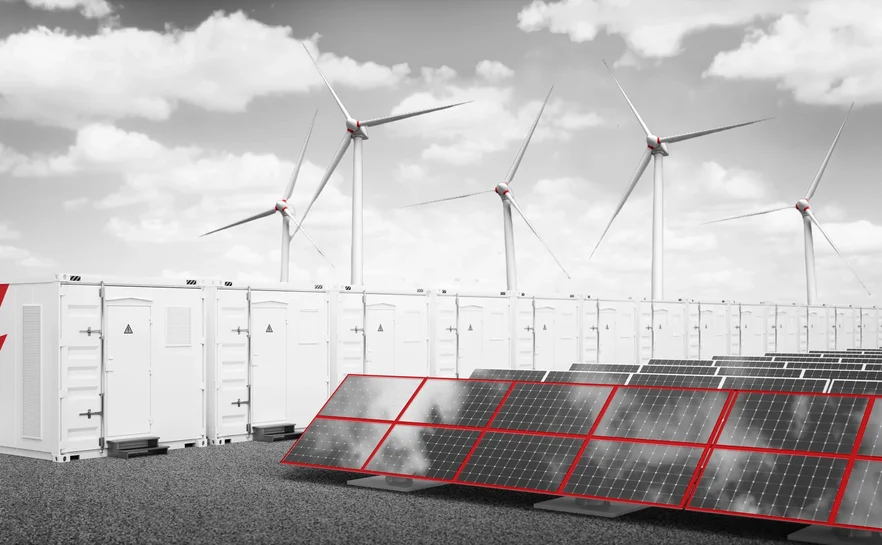
Outdoor Modular Cabinet for Battery Storage
The modular outdoor cabinet is a flexible, secure solution that ensures smooth and reliable operation of sensitive electronics in outdoor areas. It has been tested and certified for a wide range of applications, from battery storage to use in wayside rail applications.